A New Face for the West End: A Look at the Restoration Work Transforming Los Peñasquitos Canyon Preserve
By Del Brooks
The west end of Los Peñasquitos Canyon Preserve is undergoing a well-deserved and much needed period of ecological restoration. There are currently seven active restoration sites managed by The Friends of Los Peñasquitos Canyon Preserve and one major habitat creation project being led by the City of San Diego Stormwater Department. We are seeing grasslands reopen, western monarch butterfly habitats expand, and a new wetland taking shape. Together, these projects are improving habitat for some of the region’s most sensitive species.
Friends of Los Peñasquitos Canyon: Leading the Charge
The Friends of Los Peñasquitos Canyon Preserve are currently managing two major grant‑funded initiatives at the west end.
1. Protect Our Preserves (POPS) Grant: Grassland Restoration for the Northern Harrier
Under a grant from Protect Our Preserves (POPS), the Friends are restoring grasslands to support the northern harrier hawk and other sensitive species which depend on open, structurally simple grassland habitat.
Over time, invasive species such as artichoke thistle, black mustard, fennel, and Italian thistle have altered the physical structure of the grasslands. These plants produce tall and rigid stalks each year which remain standing long after they die, fundamentally changing a grassland habitat into something else.
How does this affect the northern harrier hawk?
- Harriers glide close to the ground, looking for movement and using their unique owl‑like facial disk to hear prey before expertly plucking them off the ground. Tall and dense stalks can prohibit this hunting style completely.
- Harriers in Southern California mostly nest on the ground within grasslands which is another unique thing about this bird. In areas with tall and dense stalks they can’t see or hear what’s moving inside them, prohibiting nesting.
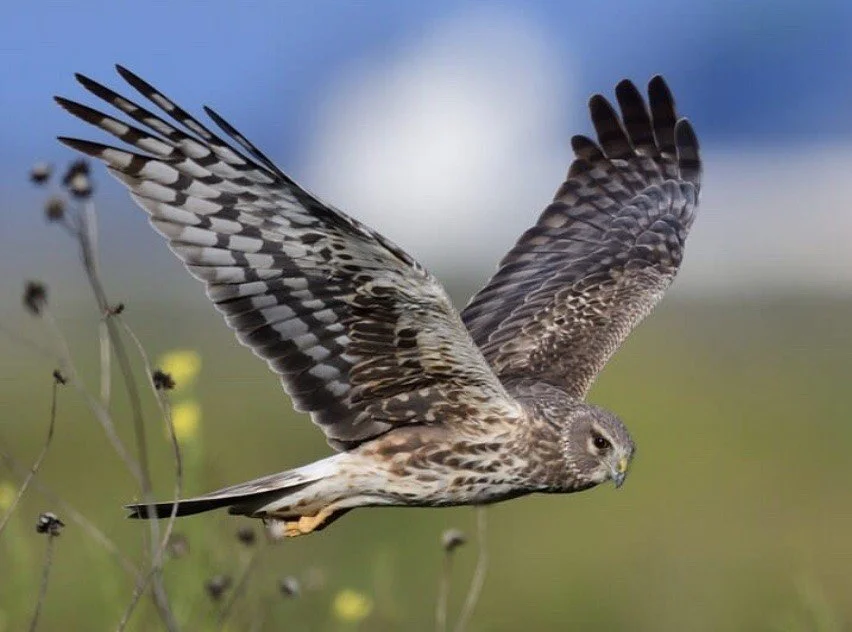
Adult Female Northern Harrier hawk
The POPS grant supports the removal of invasive plant species which have altered the structure of the grasslands. Currently, there are two active restoration sites on the west end under this grant.
2. Al Clinton Foundation Grant: Western Monarch Butterfly Habitat Creation
A second major effort is funded by the A.L. Clinton Foundation, which is supporting the creation and enhancement of habitat for the Western Monarch Butterfly. Monarch populations have declined dramatically in recent decades, and high‑quality habitat is essential for their recovery.
This project focuses on:
- Increasing native milkweed and nectar plant availability.
- Reducing invasive plant pressure that competes with native forbs.
The Friends are working across four separate sites on the west end to build and improve monarch habitat. These sites complement the grassland restoration work, creating a mosaic of improved habitat types across the landscape.
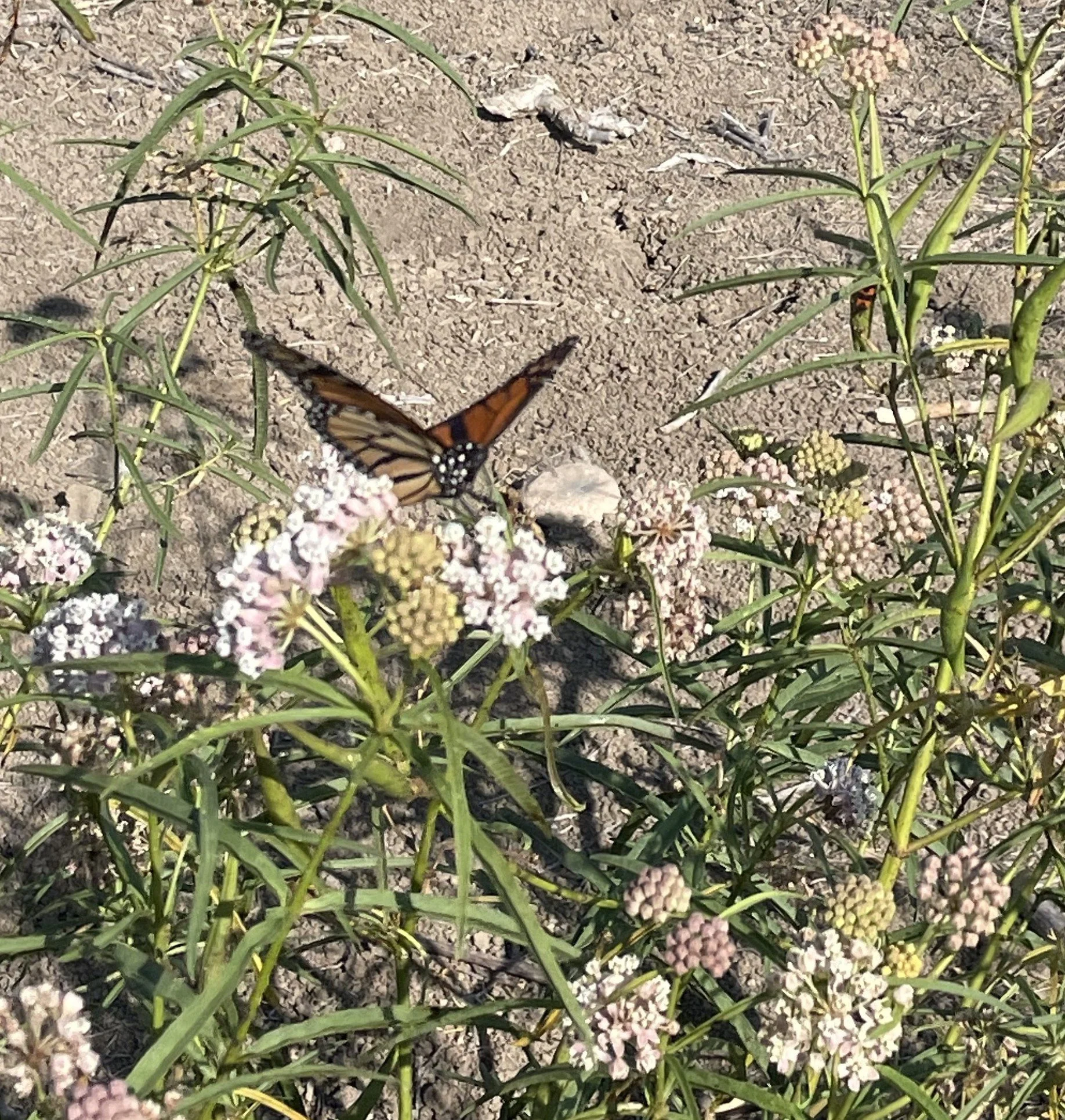
Monarch Butterfly on milkweed.
In other parts of the Canyon the Los Pen Rangers have a number of monarch restoration sites under a grant from the same foundation. The A.L. Clinton Foundation is also sponsoring monarch gardens for homeowners living near the canyon. If interested, please see: Home | Your Monarch Butterfly Garden for more details.
City of San Diego Stormwater Division: New Wetland and Upland Creation
Adding to the momentum, the City of San Diego’s Stormwater Division is implementing a mitigation project for wetlands and uplands creation. This project builds on previous work the city completed in the same area.
What makes this especially exciting is the synergy between the City’s project and the Friends’ restoration sites:
- The Friends are removing invasive weeds on one side of the road and The City is removing invasives and reshaping habitat on the other side.
- Together, the two efforts create a larger continuous stretch of restored landscape rather than isolated pockets.