Birds of prey have locking feet
by Antonella Zampolli
Raptors, aka birds of prey, possess incredibly sharp talons, which are crucial for hunting. If you look closely, you’ll see that different species have different shape/size feet, reflecting their specific hunting styles.
For instance, falcons have long, slender toes and relatively short talons. These features are ideal for catching birds (typically their main target) mid-air, much like casting a net. If the prey is too large to be caught, fast-flying falcons can use their amazing speed to turn themselves into living bullets. Using their feet as impact weapons they can knock prey out of the sky, and once on the ground, sever the prey’s spinal column with their specialized beaks.
In contrast, hawks, owls, and eagles (usually more ground-prey oriented), as well as ospreys, are equipped with short, thick toes and robust, powerful talons designed for gripping and crushing. A red-tailed hawk, for example, can exert upwards of 200 pounds of pressure per square inch with its talons. Hawks, owls, and eagles kill their prey by using their powerful feet to crush it or puncture vital organs. Eagles demonstrate an even more formidable grip, capable of exerting on average 400-800 PSI.
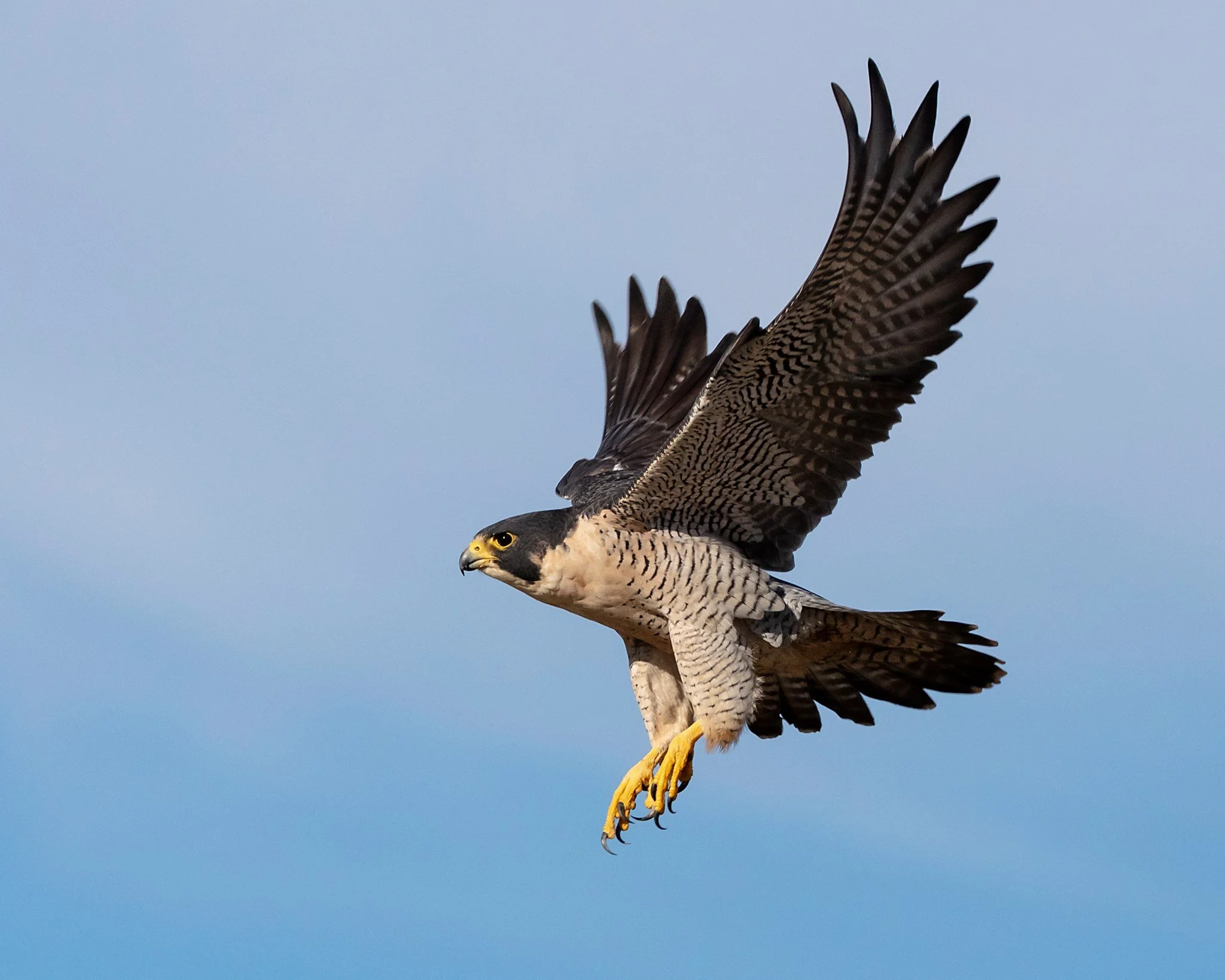
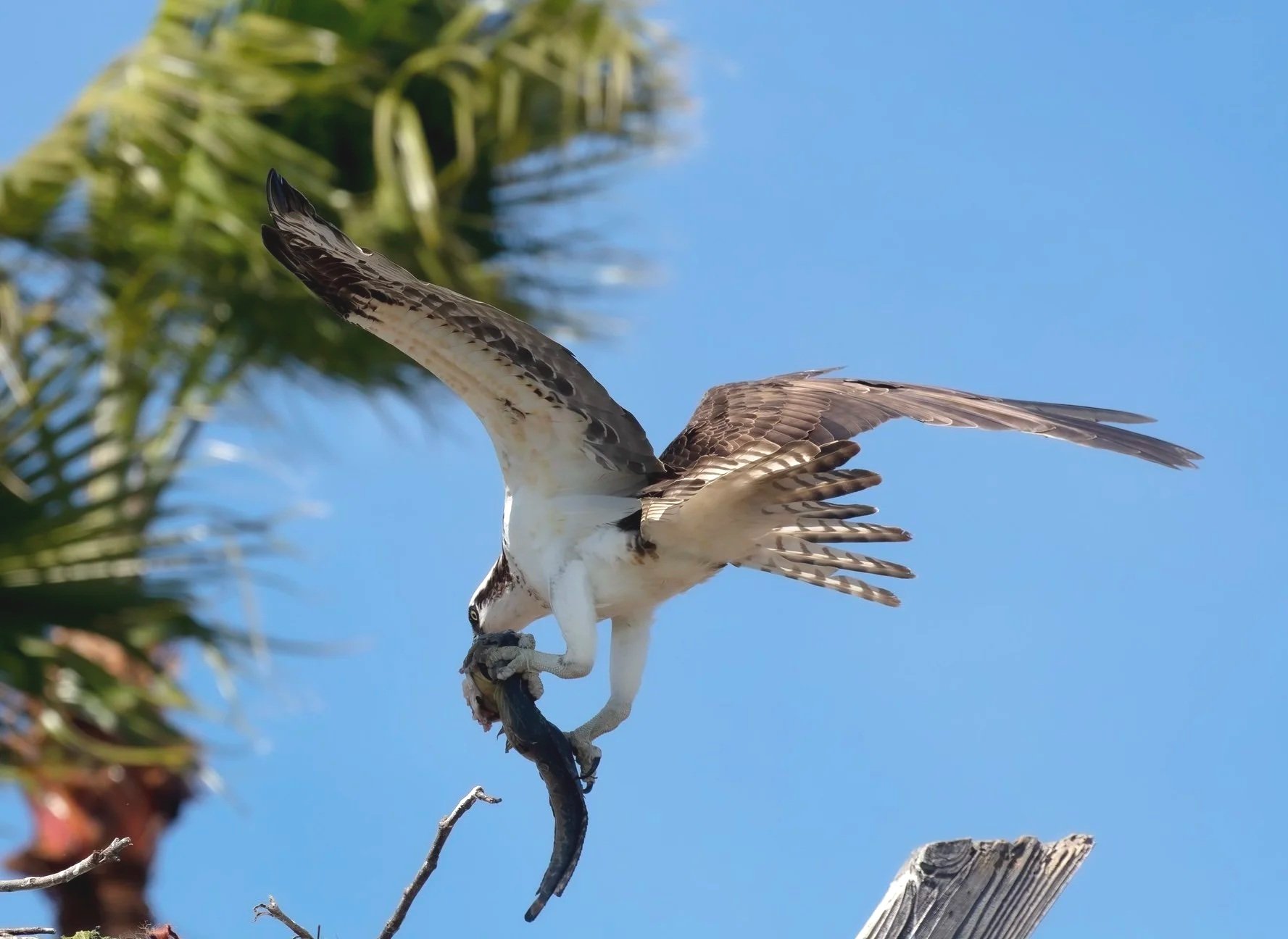
Different foot shapes of Peregrine falcon (left) and Osprey (right). Pictures from George Adkins
The Mechanics Behind Raptor Grip Strength
How can such extreme grip strengths be achieved by birds that weigh relatively little, often just a couple of pounds? A closer look at a bird leg anatomy and tendon system reveals a specialized mechanism that explains how such a deadly grip is actuated and can be sustained for the time necessary to completely subdue prey.
Perching Reflex and Tendon Locking System
Raptors grip strength primarily originates from their leg muscles. These muscles connect to strong, specialized tendons that extend down to the toes, and are crucial for maintaining grip.
When a bird’s foot finds a perch, or prey, its toes curl around it. This occurs as the bird bends its knees and ankles, pulling its flexor tendons. This action retracts the toes and locks them in place. This mechanism, also known as the perching reflex, allows birds to perch without expending excess energy. To release its grip and fly or walk away, a bird must first straighten its knees and ankles.
The tendon locking system assists in maintaining and increasing the lock. Several bird species (and bats) have tendons and tendon sheaths with ridges and pleats. These connect by sliding one on top of the other and “locking” only when the toes are curled. This system helps to lock the bent toes in place, functioning much like a ratchet or a zip tie.
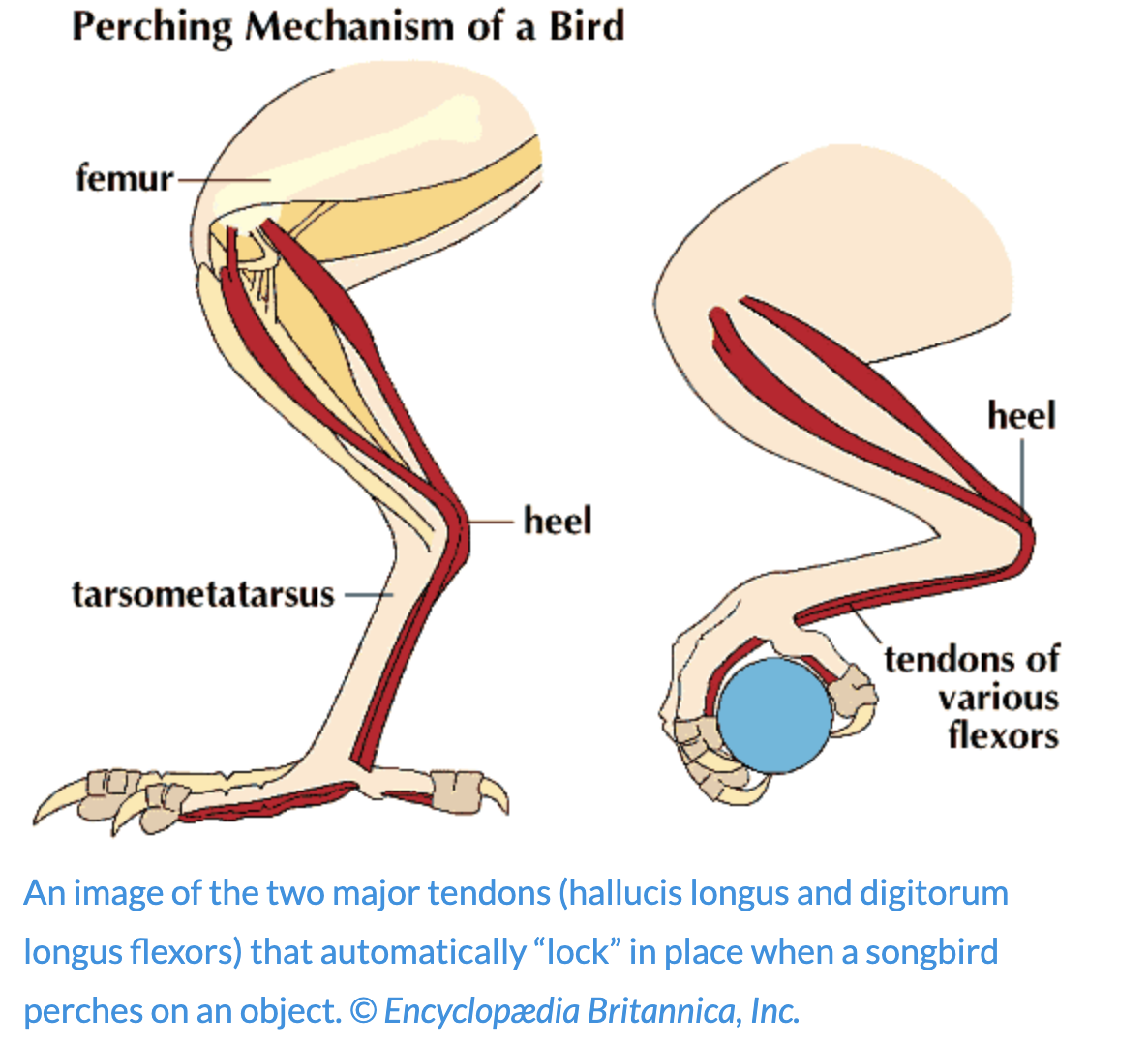
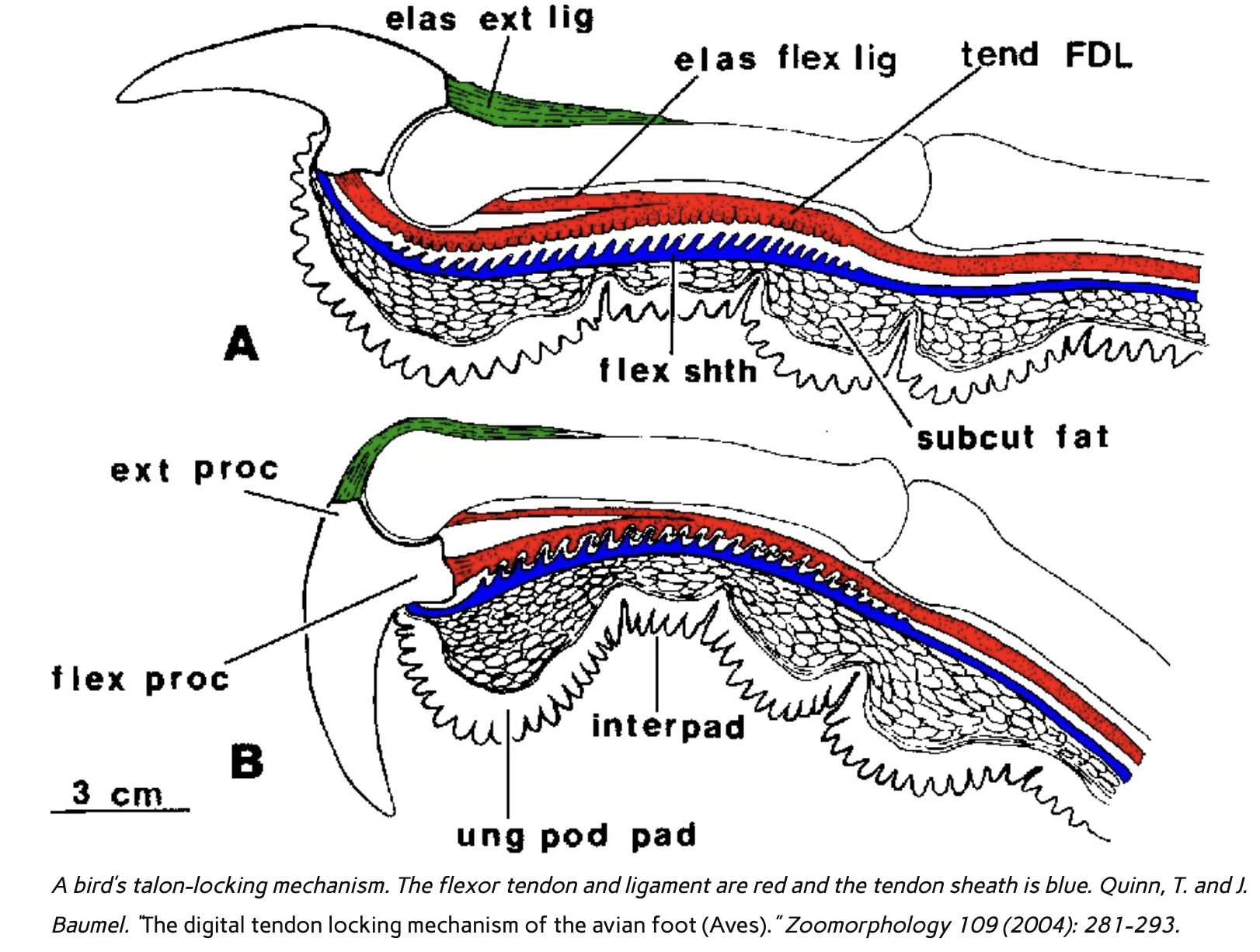
Perching reflex (left) and locking tendons (right) allow birds of prey to multiply the strength of their grip
In raptors, the perching reflex and tendon locking system, combined with razor-sharp talons and strong leg muscles, create a ratcheting mechanism that requires minimal energy to lock in place and can be engaged multiple times in a row, multiplying the overall grip pressure. Hawks, owls and eagles, unlike falcons, have additional bone fusions and, on average, larger legs, all contributing to the incredible grip that allows them to subdue prey several times their weigh.