By Guest Author, Cindy Pencek, Trail Guide Class of 2024
(Article reprinted from the Mission Trails newsletter with permission)
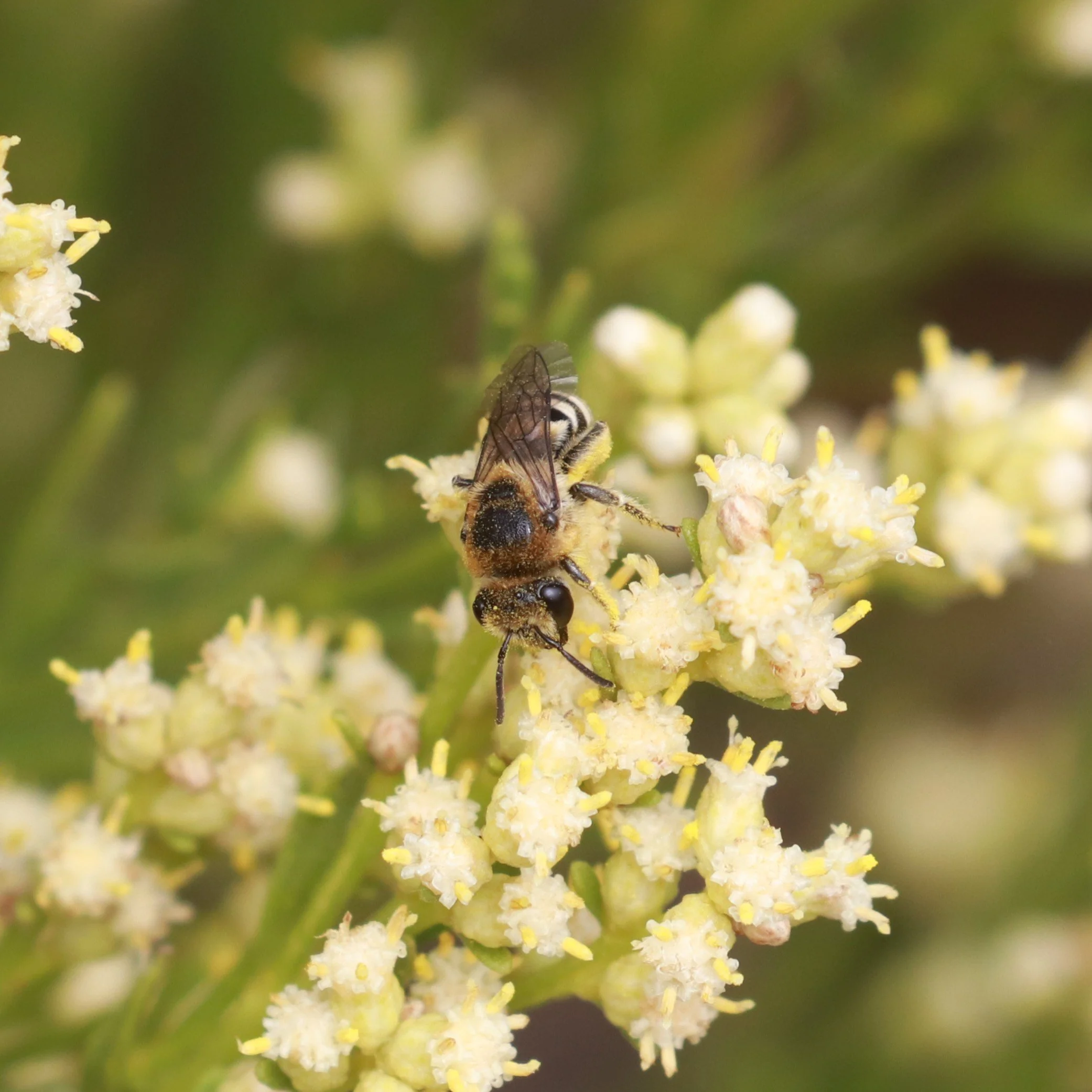
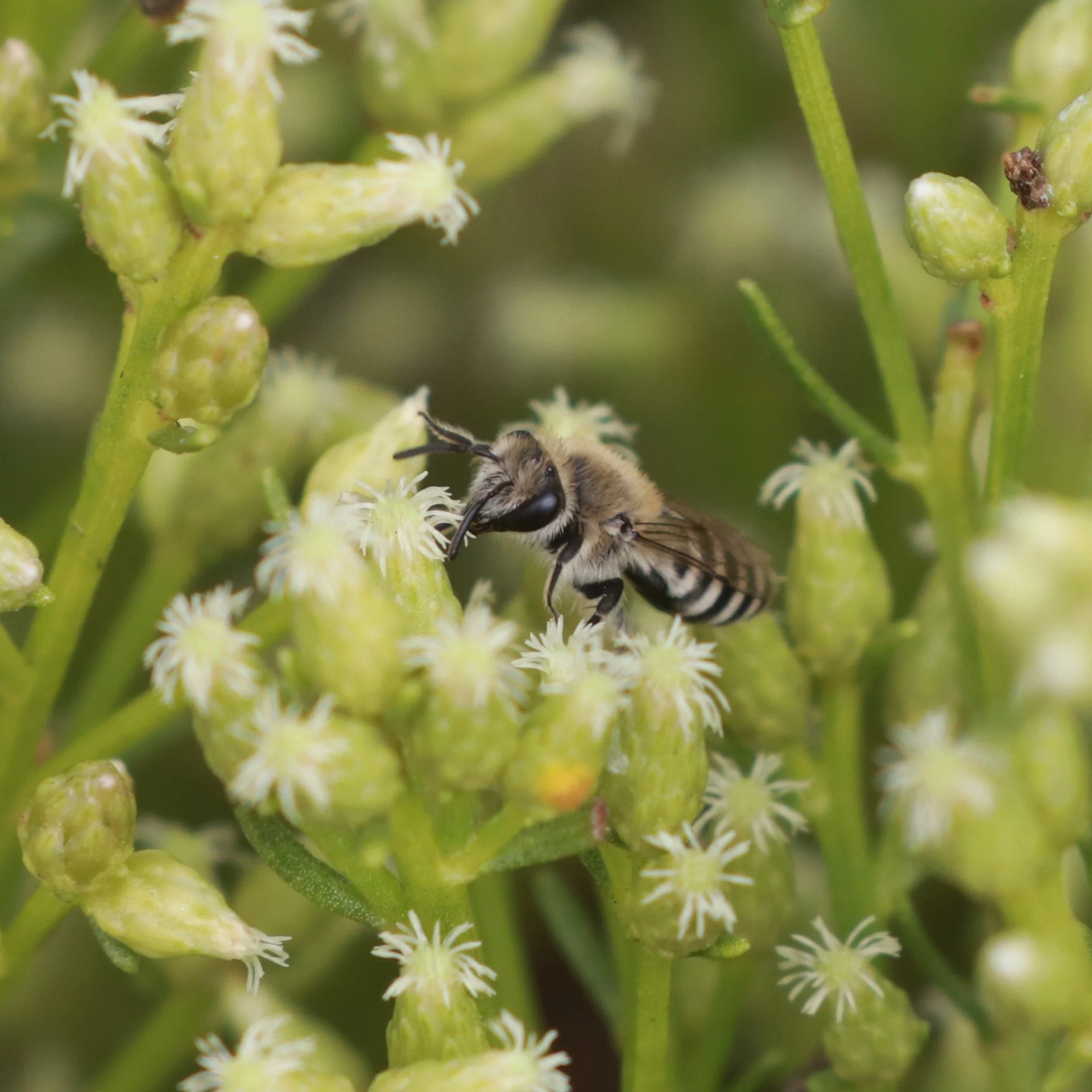
Cellophane Bees (Colletes sp.)
https://www.inaturalist.org/observations/136724003 by nature4lzw
As fewer flowers are blooming in late summer and early fall, pollinators congregate on the few things that are blooming. Coastal goldenbush and baccharis become Grand Central Station. One species of native bee you’ll see zipping around these plants is in the genus Colletes, also known as cellophane bees. As with most native bees, the males fly super-fast and barely rest, while the female may have large amounts of pollen visible on her legs and will land for longer periods to collect the pollen.
Most groups of bees are named for their nest type. Cellophane bees got their common name from secretions they make in their underground nests that line the nest in a waterproof, plastic wrap-like way. The female regurgitates the substance and has a tongue with an adapted shape that can cover the walls of the nest like a paintbrush. This special coating is meant to keep water in, as the provisions for young are delivered in a soupy liquid (rather than a dry loaf as most other native bees provision their nests). They build nests by digging in sandy soil and are not social but may have aggregations with nests near other bees of the same species. Likely only one generation per year, with emergence in summer or early fall to match the blooming season of the Coastal Goldenbush (Isocoma menziesii) and Broom Baccharis (Baccharis sarothroides). Observations in San Diego County peak in September and October.
This is a bee with big, black eyes that come closer together toward the mouth, giving the face a heart shaped look straight on. The head and abdomen are furry, and most Colletes bees have sharp black and white bands on the abdomen. Colletes are hard to indentify to species. There is one species in SD county that is identifiable from photos, Colletes ochraceus, which occurs by the coast. That ochraceus bee has subdued abdominal banding as it appears the whole bee has been dusted in gold powder. See https://www.inaturalist.org/observations/256914900
I was able to catch a Colletes bee on my September 24 th walk in Mission Trails Regional Park and show it to guests (before release). One thing to remember when teaching about this bee is that younger people don’t know the word “cellophane.” Use “plastic wrap” when describing the nest features.