Channel Island Oaks Planted in Peñasquitos Canyon
By Mary Lueking
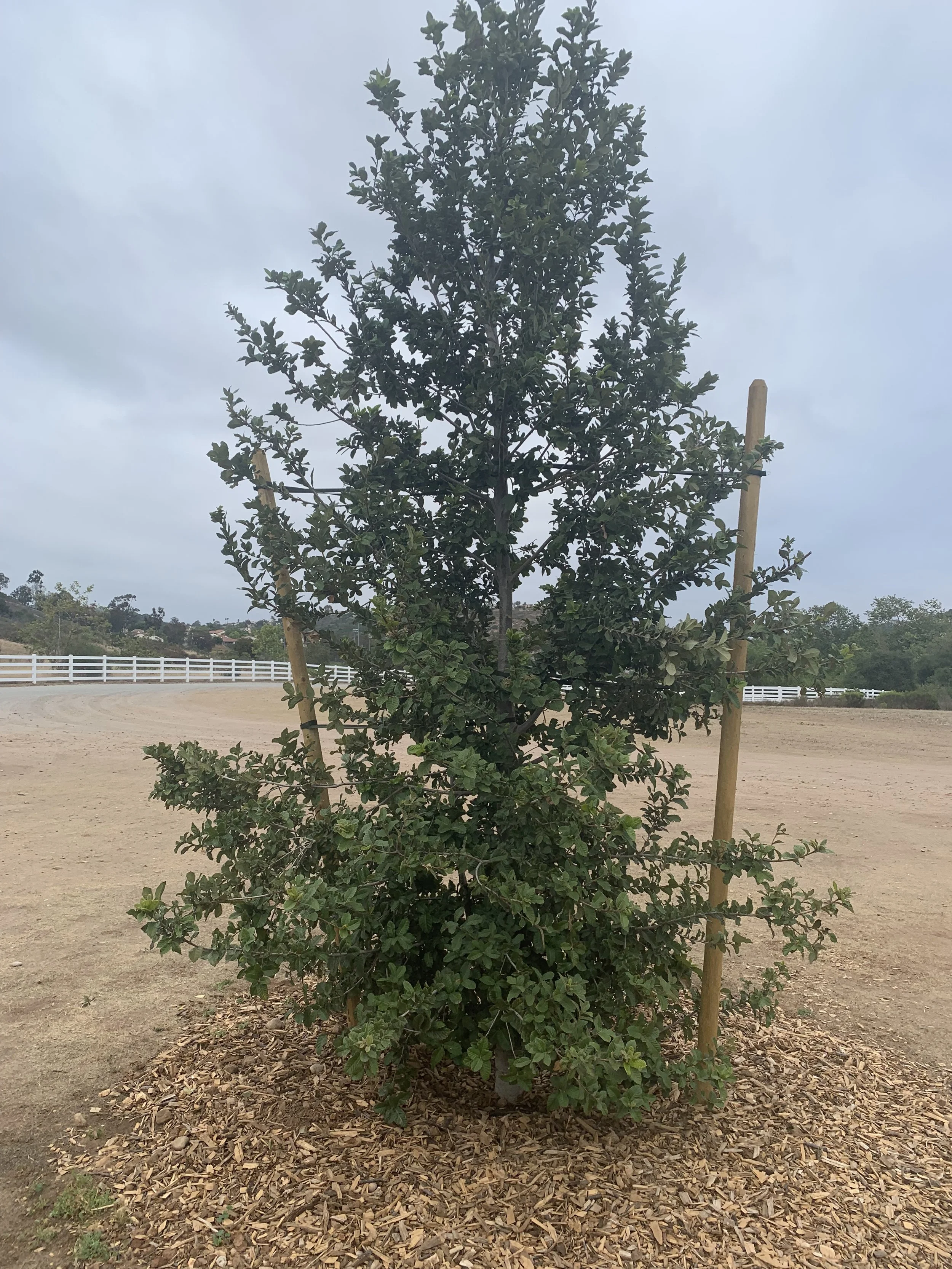
Earlier this year, six Channel Island Oaks were planted in the large parking area just east of the community gardens in Los Peñasquitos Canyon. According to Dario Lombardo, Agricultural Scientist with the county Department of Parks and Recreation, this particular project involved planting six large trees (mainly 60 inch box size) in each of the County’s Board of Supervisors five districts, taking into account multiple priorities, including the HPI Tree Canopy score.
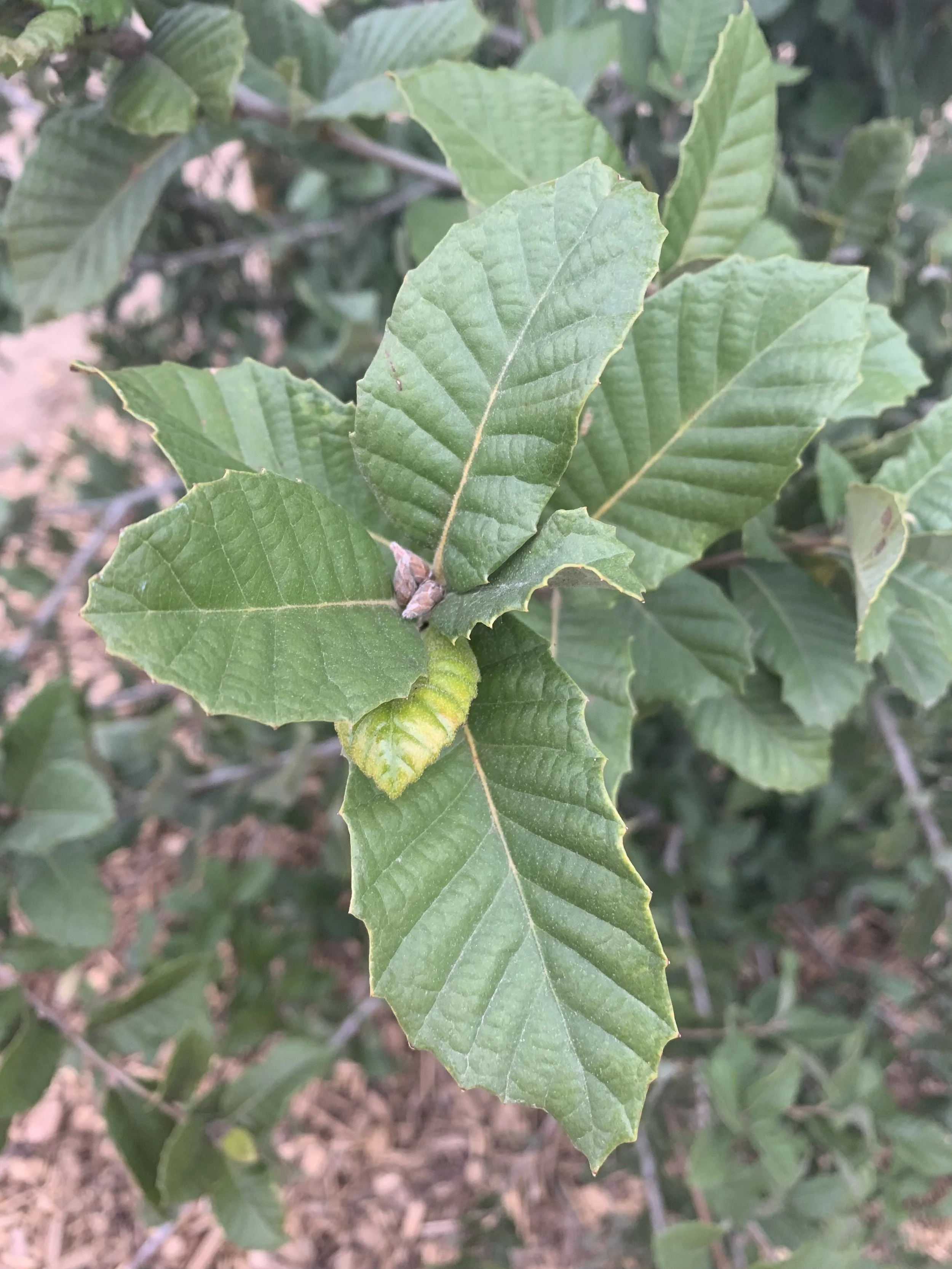
Quercus tomentella (Island Oak) was selected for the Los Peñasquitos parking lot installation because it offers many valuable qualities, such as adaptability to dry parking lot conditions (once well established), low structural pruning requirements, and high ornamental value thanks to its leathery, evergreen, glossy leaves.
Lombardo indicated that his department is aligned with the University of California and US Forest Service ongoing efforts to diversify the species of trees being planted across the region. They are committed to selecting a broad range of Southern California native species and Climate Ready trees that can better withstand current invasive pests and the unique challenges of urban environments.
According to Calscape (the California Native Plant Society) the Island Oak is the rarest of California’s oaks, native only to five California islands and Guadalupe Island off the west coast of Baja California. It is listed as an endangered species by the IUCN (International Union for Conservation of Nature) because of its limited distribution in the wild.
The Island Oak is an evergreen tree in the Oak Family (Fagacea). It is smaller than many oaks but still can grow up to 66 ft tall and 35 ft wide. The leaves are hairy (tomentose) on the upperand lower surfaces, toothed, and larger than other oaks. Young twigs are also hairy, yet mature bark is gray and furrowed. Mature acorns have rounded tips and are also quite large compared to other species.