Spiders - Trail Guide Reference Sheet
By Dax London, Trail Guide for Mission Trails Regional Park
[This document was created by Dax London for the use of trail guides at Mission Trails Regional Park. However, the contents should generally be applicable to Los Peñasquitos Canyon Preserve as well.]
Spiders at Mission Trails
Spiders are among the most important yet misunderstood creatures at Mission Trails Regional Park. There are more than 400 spider species in San Diego County, where they occupy virtually every ecosystem, plus gardens and homes. They are the silent regulators of life by keeping insect populations in check, maintaining plant health, and supporting the entire food web. From the webs that glisten with dew along the trails at dawn to the jumping spiders darting across sunlit rocks, these eight-legged predators are essential to the park’s ecological balance.
Every ecosystem in Mission Trails, from chaparral, grassland, riparian, and coastal sage scrub, depends on spiders. They are not pests to be feared but natural partners in the ongoing work of keeping the environment healthy and diverse.
Spider Anatomy: Built for Survival
Spiders are arachnids, not insects. They have two main body parts: the cephalothorax (which combines the head and thorax) and the abdomen. Their eight legs attach to the cephalothorax, which also houses the eyes, mouthparts, and brain.
Key external features include:
● Chelicerae (fangs): Used to inject venom and begin digestion.
● Pedipalps: Small appendages that act as sensory tools and, in males, are used for mating.
● Eyes: Most species have eight, though jumping spiders have especially large, forward- facing eyes for excellent vision.
● Spinnerets: Silk-producing organs at the tip of the abdomen.
● Book lungs and spiracles: Thin, folded respiratory surfaces that allow spiders to exchange oxygen efficiently.
Inside, spiders have a simple yet efficient body design. Their organs float in hemolymph (blood- like fluid), protected by a sturdy exoskeleton made of chitin that provides structure, prevents dehydration, and serves as armor.
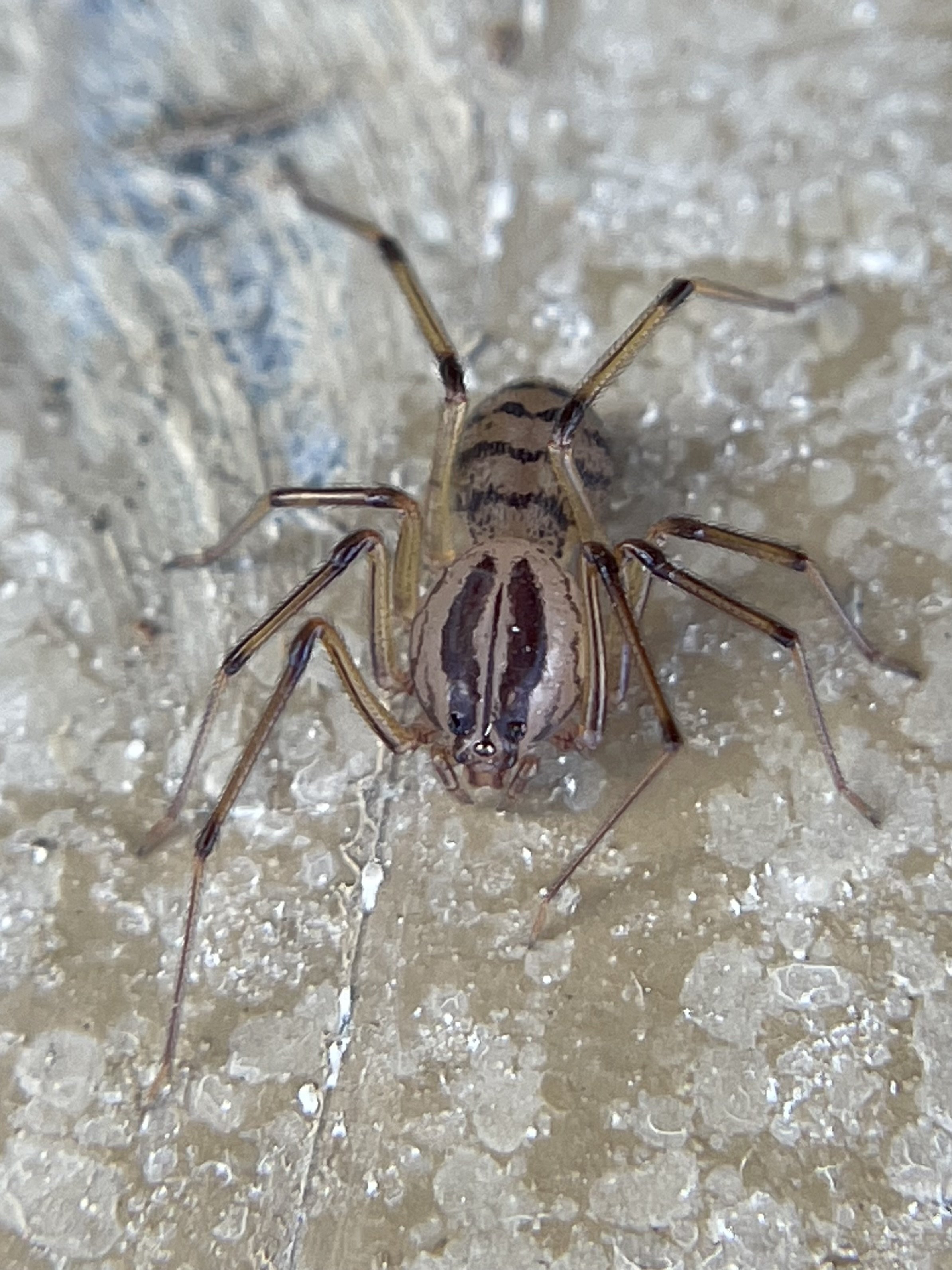
Striped Spitting Spider
Photo: Dax London
Exoskeleton & Growth: Hard on the Outside, Flexible in Life
A spider’s exoskeleton doesn’t grow as the spider does. To mature, spiders must molt, sheddingtheir outer layer several times throughout their lives. Before molting, a spider secretes enzymes to separate the old exoskeleton from the new one forming underneath. The process leaves them vulnerable for several hours until their new exoskeleton hardens.
The exoskeleton has multiple protective layers. A waxy outer cuticle that prevents drying out, a flexible middle layer that allows movement, and an inner support layer that gives strength. This remarkable adaptation lets spiders thrive in harsh habitats like Mission Trails’ dry chaparral slopes and rocky outcrops.
Circulation & Respiration: Blue Blood and Book Lungs
Spiders have an open circulatory system. Instead of veins and arteries, their hemolymph flows freely around the organs, delivering oxygen and nutrients. Their blood contains hemocyanin, a copper-based molecule that turns blue when oxygenated, unlike the iron-based hemoglobin in humans.
For respiration, most spiders use book lungs, which evolved from the gills of ancient aquatic ancestors. Air passes through thin, layered “pages” of tissue where gas exchange occurs. Some species also have tracheal tubes, allowing them to breathe more directly. This combination of systems allows spiders to survive in both humid riparian zones and dry, windy ridges across the park.
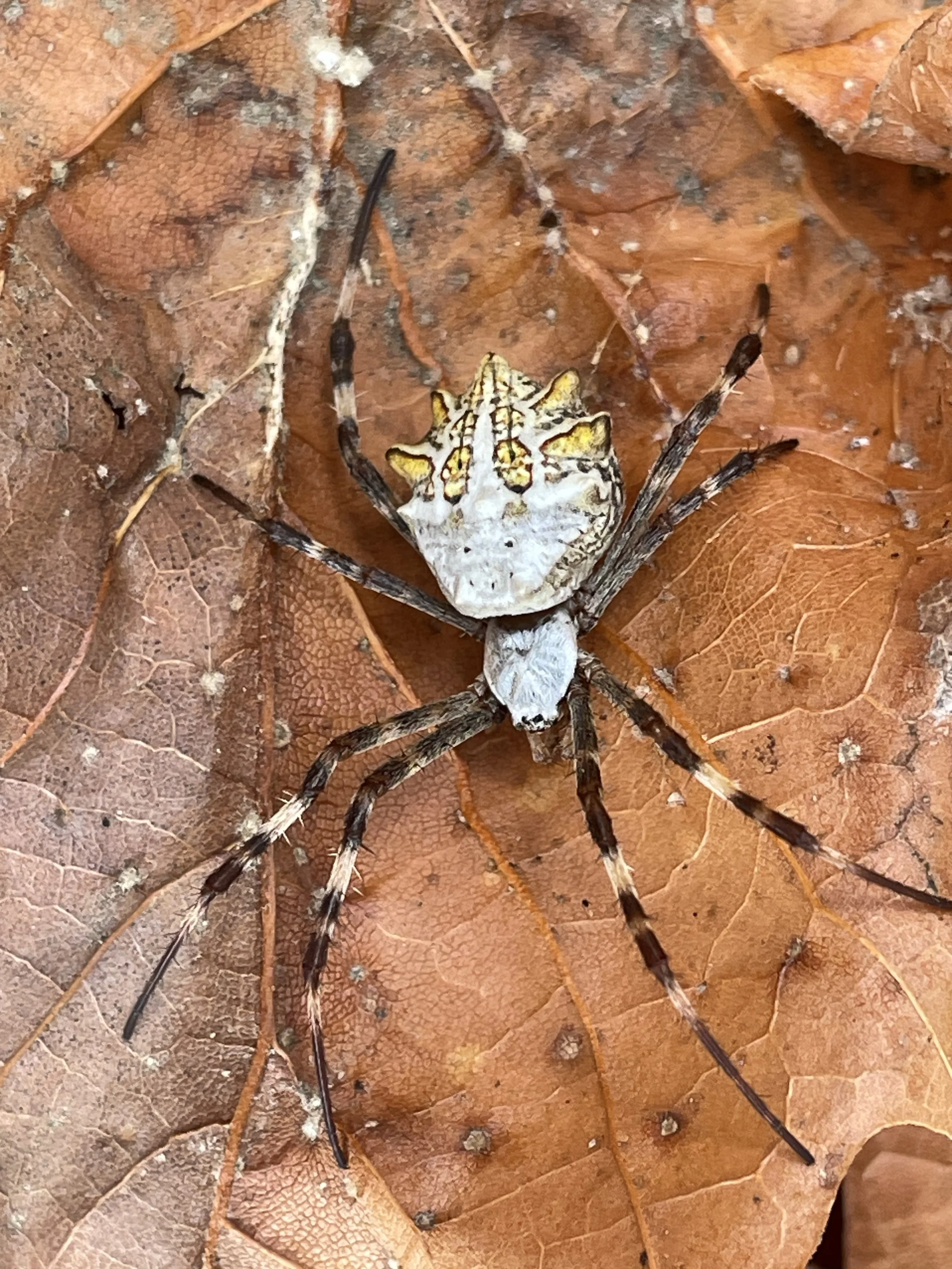
Silver Argiope
Photo: Dax London
Digestion & Feeding: The Liquid Diet
Spiders are liquid eaters. They can’t chew, so they inject digestive enzymes into their prey to dissolve the soft tissues. Once liquefied, the spider sucks up its meal using a muscular stomach. This process often leaves behind only a hollow shell of the insect. By consuming such vast numbers of insects including mosquitoes, beetles, aphids, and flies, spiders act as the park’s most efficient control agents. Every web along a trail represents the park’s natural balancing mechanism to keep the ecosystem thriving.
Venom & Defense: Designed to Subdue, Not Attack
All spiders have venom glands, though most are harmless to humans. The venom is used primarily to immobilize prey, not for aggression. A spider’s fangs (chelicerae) work like tiny syringes, injecting venom to quickly paralyze small insects.
Some spiders, such as tarantulas, also use urticating hairs, tiny barbed hairs they can flick from their abdomen to irritate predators. Others rely on camouflage, speed, or retreating into burrows for defense.
At Mission Trails, species like the Western Black Widow tend to hide under logs or rocks and are not aggressive. Most bites occur only when spiders are accidentally pressed against skin.
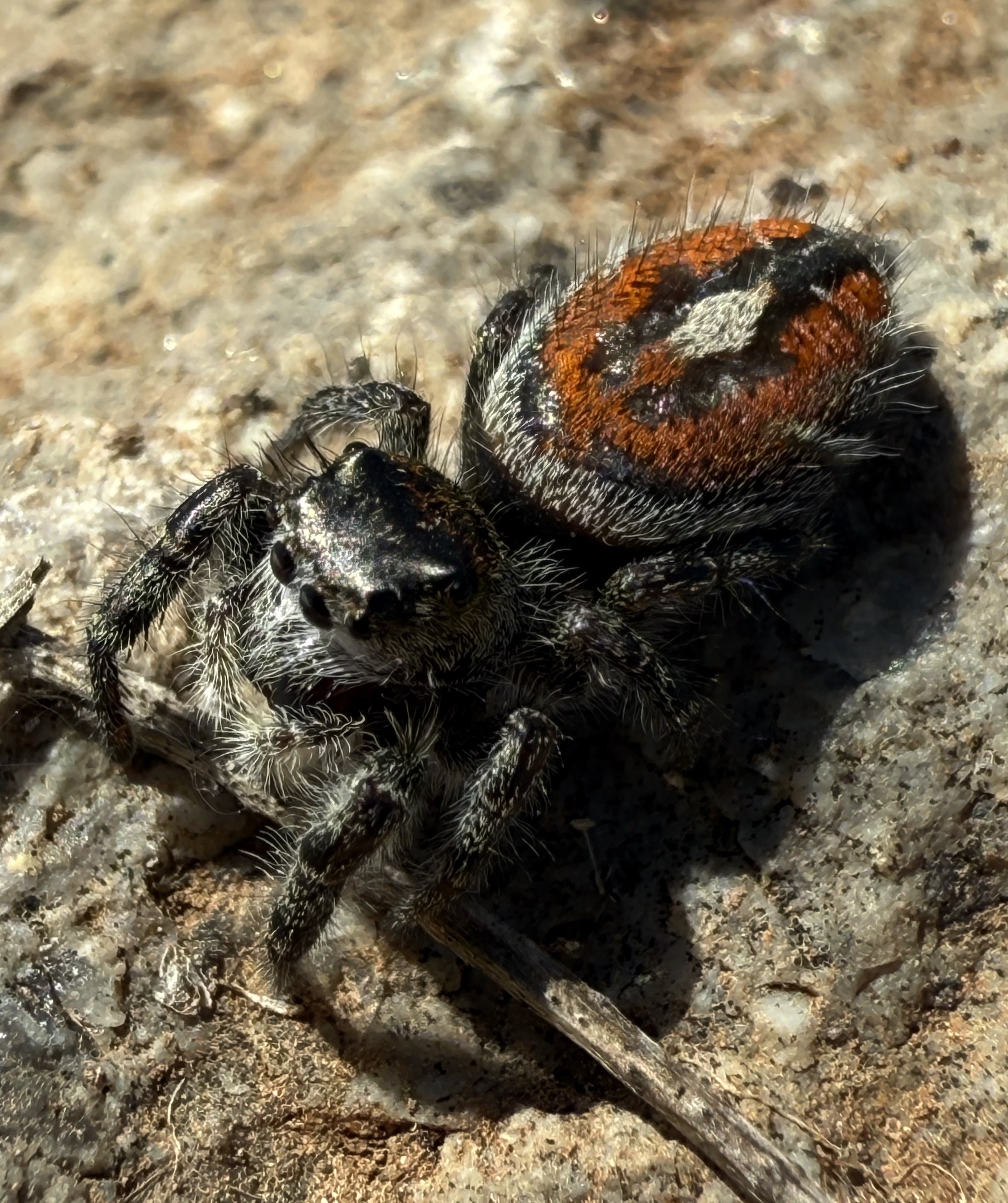
Phoenix Jumping Spider
Photo: Dax London
Silk & Web Engineering: Nature’s Master Builders
Spider silk is one of nature’s most remarkable materials. Stronger than steel by weight and more flexible than nylon. Spiders produce multiple types of silk, each with a unique function: sticky capture silk, dragline silk for structure, and soft silk for egg sacs.
Different spiders use silk in different ways:
● Orb Weavers build classic circular webs that capture flying insects.
● Funnel or Grass Spiders weave sheets with tunnels for ambush.
● Jumping Spiders use silk safety lines and tiny hammocks for rest.
● Widows and False Widows build messy but incredibly strong cobwebs.
Spiders constantly recycle their silk, eating old webs and reusing the proteins, which is a model of efficiency in the natural world!
Life Cycle & Reproduction: From Egg to Hunter
A spider’s life begins inside a silk egg sac, where the mother may guard her offspring until they hatch. Young spiders, or spiderlings, disperse by ballooning (riding air currents on silk threads to new territories).
Spiders grow through multiple molts before reaching maturity. Depending on the species, they may live for a few months (jumping spiders) or several years (tarantulas).
Reproduction involves delicate courtship. Males use pedipalps to transfer sperm to females, often performing vibrations or dances to avoid being mistaken for prey.
Ecological Role: Balancing the Web of Life
Spiders are the unsung heroes of the food web. They are both predators and prey, feeding on insects but also sustaining birds, reptiles, small mammals, and even other spiders. By controlling insects, they reduce the need for chemical pesticides, support agriculture, and preserve biodiversity. Their webs create microhabitats for tiny invertebrates and even collect organic matter that enriches the soil.
At Mission Trails, spiders help maintain the delicate balance between predator and prey. They keep plants healthy, animals fed, and the landscape alive.
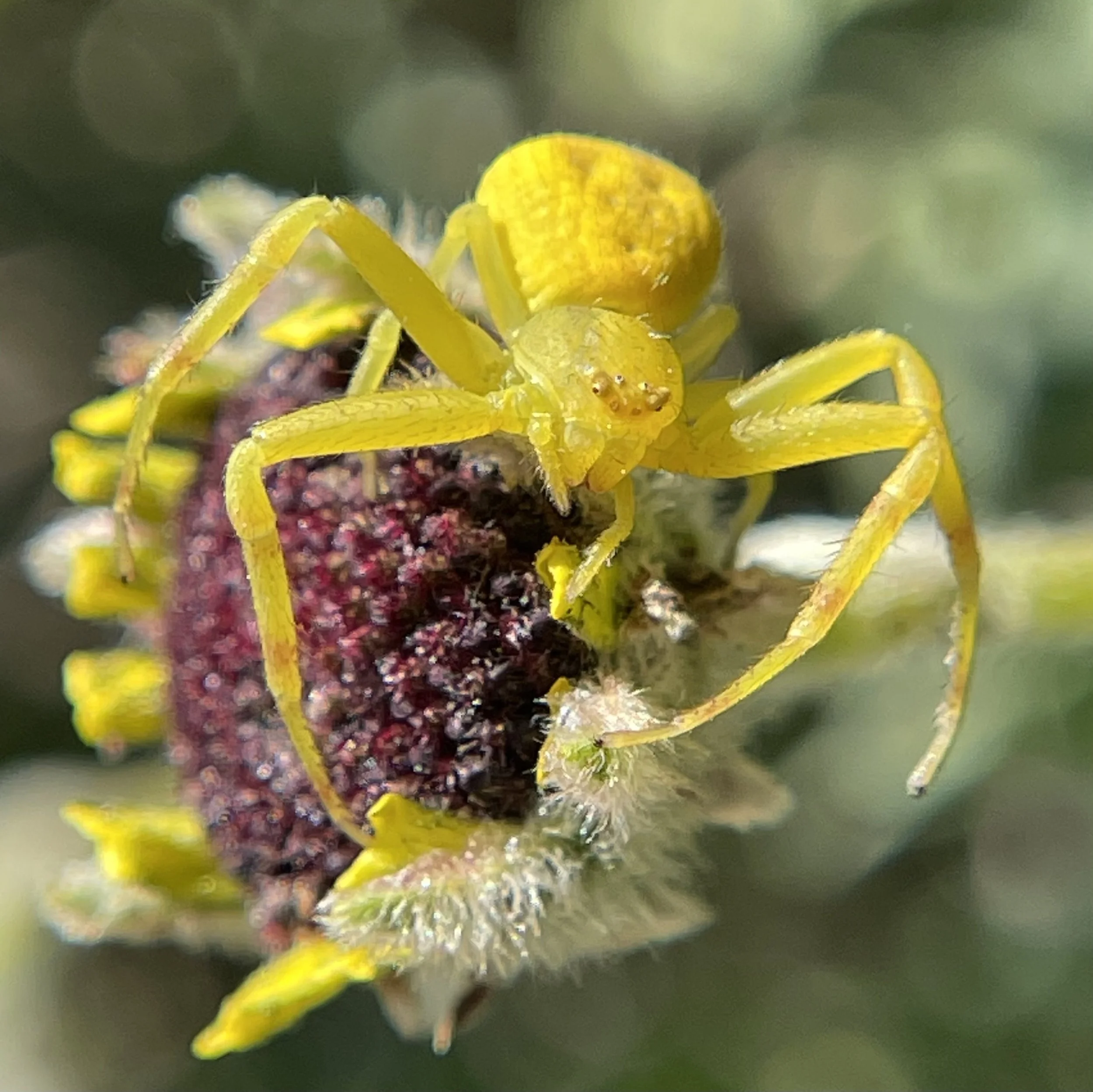
Crab Spider
Photo: Dax London
Interpretive Talking Points for Youth & Visitors
● “Without spiders, insects would overwhelm our planet within months.”
● “Spiders are engineers, recyclers, and farmers! All rolled into one.”
● “Every web you see is a miniature ecosystem, keeping nature in balance.”
● “Spiders eat more bugs every year than all the world’s birds and bats combined.”
● “A healthy number of spiders means a healthy environment.”
Takeaway:
Spiders are not creatures to fear!! They are to be understood, respected, and celebrated. Every silk strand at Mission Trails connects to the greater story of balance, biodiversity, and the invisible work that keeps our ecosystems thriving.
References:
1. Adams, R. J. (2014). Field guide to the spiders of California and the Pacific Coast states (California Natural History Guides, Vol. 107). University of California Press.
2. Gordon, D. G. (2005). Uncover a tarantula: Take a three-dimensional look inside a tarantula!