by Melanie Fontana, Park Ranger
Hello everyone,
As you know, in June and August of this year we had two fires in the west end of Los Peñasquitos Canyon Preserve. The scars together total over 230 acres, compromising several miles of authorized trails, including both the North and South Main Trails, Sidehill, and Big and Little Waimea—all of which require fencing and some repair work before we can open them to public use.
The entire west end of the canyon, from the Waterfall to Vista Sorrento Parkway is still under the Fire Department’s evacuation order. As such, all trails west of the Waterfall are closed.
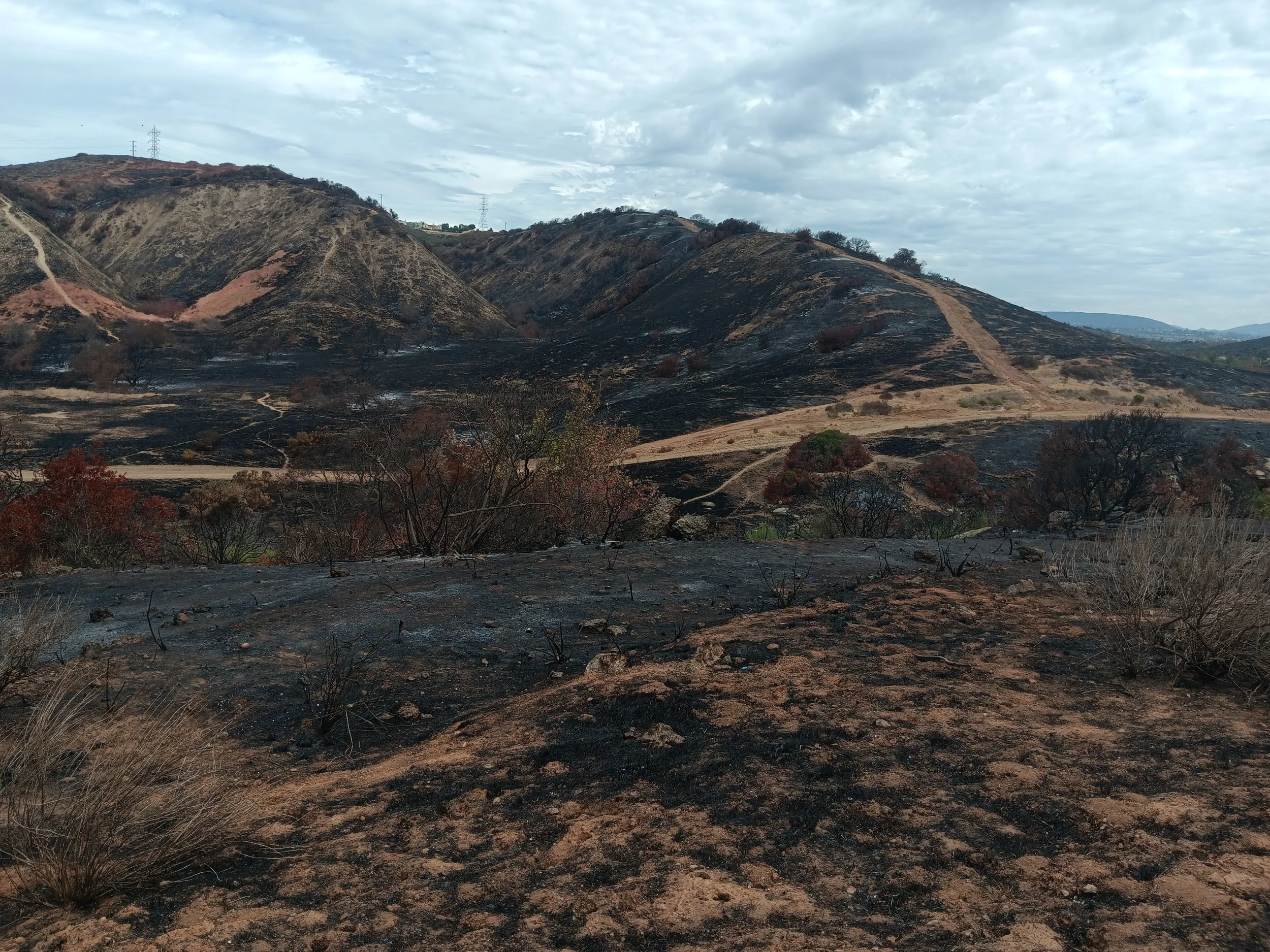
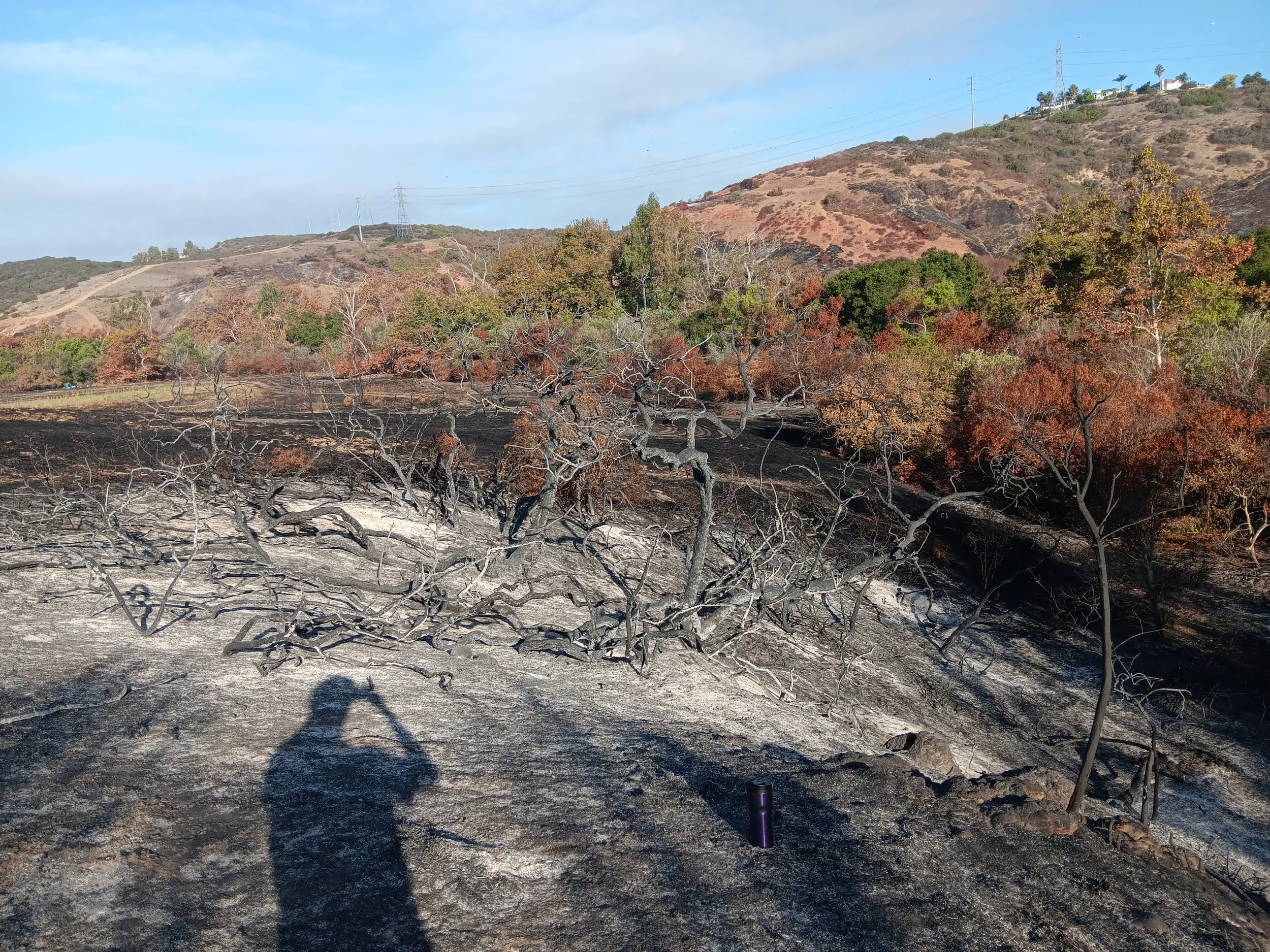
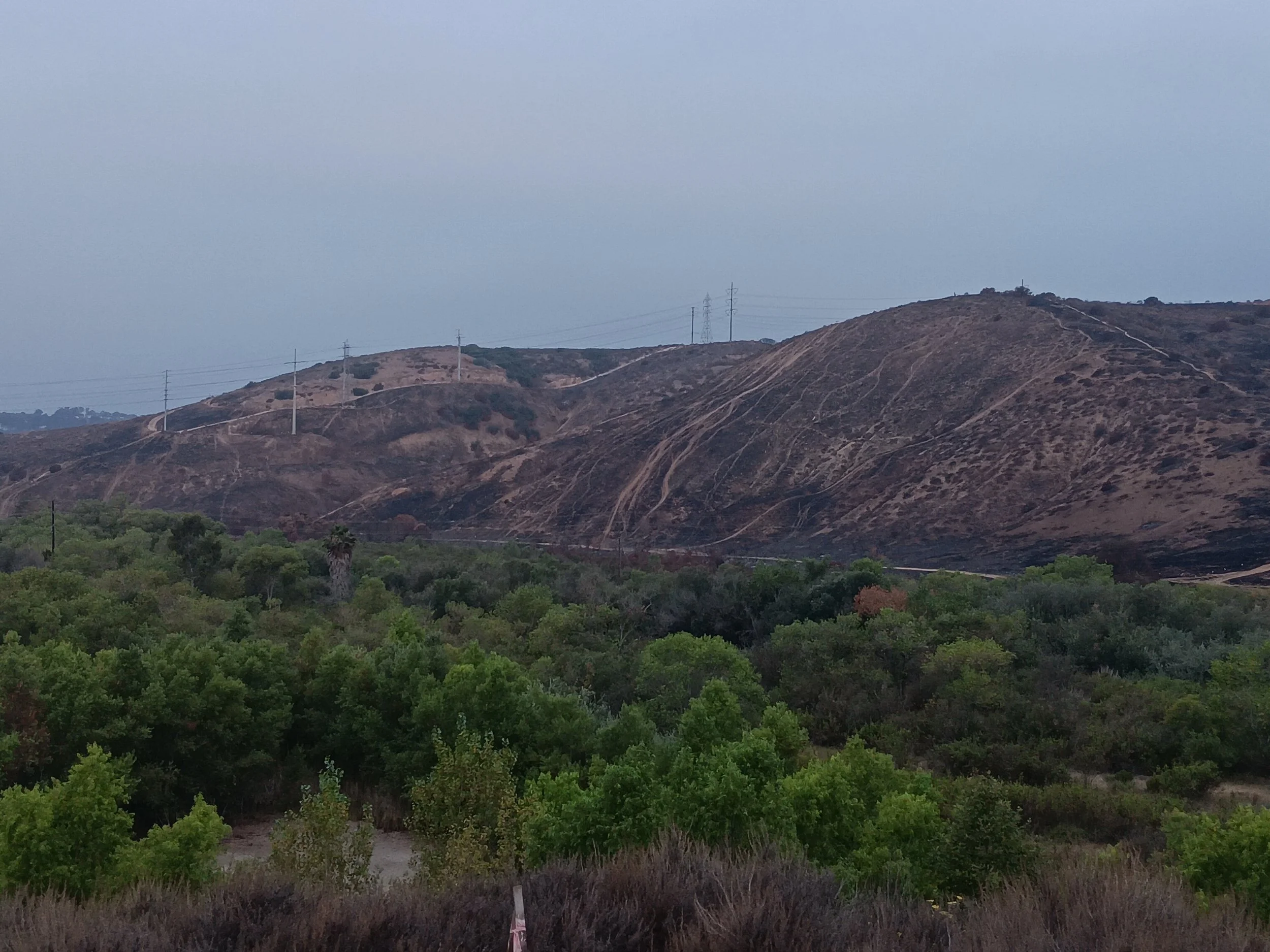
Initially, this was due to several hot spots of smoldering embers that reignited throughout the week following the original multiday emergency response. SDFD has kept the order in place due to hazardous trees over-hanging trails. Many adult trees were girdled by fire and juveniles fully engulfed. Sadly, that ends the trees’ lives and makes them prone to dropping limbs and falling over. The fire burns out the dead heartwood and the heat boils the trees’ sap in the formerly living wood, weaking the structure catastrophically. SDFD has been working with our park staff to strategically assess and triage the dangerous trees. The plan is to begin cutting this week, however, tree work is an auxiliary duty for fire fighters, so it will be snuck in as they are available between fire engine and paramedic tasks. Once those trees are dealt with, the trails will almost be safe and ready to open, pending protective barrier fencing.
The barrier fence is essential for improving the ecological recovery of our burned areas. Fire is a radical disturbance to our habitats, literally changing decades of growth in a matter of hours. While it is natural and many of our native species are adapted to re-sprout from seed and surviving roots quickly, it puts the habitats in an intensely vulnerable state. Human activity in the burn scars hampers regrowth of vegetation. It destroys the fragile ashy crust formed during the fire and the molecular soil bonds that protect the soil from the erosive power of wind and rain. When disturbed, the soil and ash turn into dust, making it much more prone to be carried off. This erosion potential is heightened on slopes. Often flooding and mudslides follow fires. Human disruption of the soil post-fire greatly exacerbates that potential, which has damaging effects not just for our fire scars, but for the habitats downstream as well. This is of even greater concern in the face of the increased rain predictions associated with El Niño years.
Human activity also carries nonnative seeds into burned areas, which can lead to post-fire habitat conversion, from healthy, native communities into nonnative and invasive dominated ones. Habitat conversion is the biggest threat to our region’s biodiversity. Nonnative vegetation communities are only able to support a fraction of the wildlife supported by native vegetation communities. They are also less fire dampening and resilient, thriving under increased fire frequency, meaning worse fire danger for the human communities around them.
The barrier not only serves to protect the vulnerable habitat as described above, but it also delineates the authorized trails, allowing for less confusion amongst trail users, new and routine alike. Right now, a lot of the vegetation-based landmarks are missing and with the imprints left by the machines and crews of the emergency responders, it can be difficult to determine the actual trail alignments. The fencing makes that easy. It is temporary fencing, but on an ecological timescale. Once in place, we will only remove it when the habitat has suitably grown-in, rendering the fencing unnecessary. That can be anywhere from months to years depending on the habitat.
Park rangers, partner organizations, and volunteers so far have installed several thousand feet of fencing on the South and North Main Trails. As soon as Fire finishes the trees on the South side, we’ll finish the last bit of fencing and we’ll be able to open the South Main to the public. With luck, that could mean before the end of the month at the rates we’ve been going (depends on the complexity of the tree removals). The North side will take longer, but we are already through with nearly half of the total fencing required.
This closure may seem long, but wildland fire recovery is an important process and worth the patience. In other agencies, fire closures last years. Ours is partial and will be counted in weeks. With your cooperation and that of your friends, family, and associates with whom you might share this information, our canyon could end up healthier and more resilient for this disturbance, with renewed vitality and increased biodiversity.
Thank you for your consideration and regard for our habitats and trails.
Melanie Fontana
Park Ranger
City of San Diego
Los Peñasquitos Ranger District